


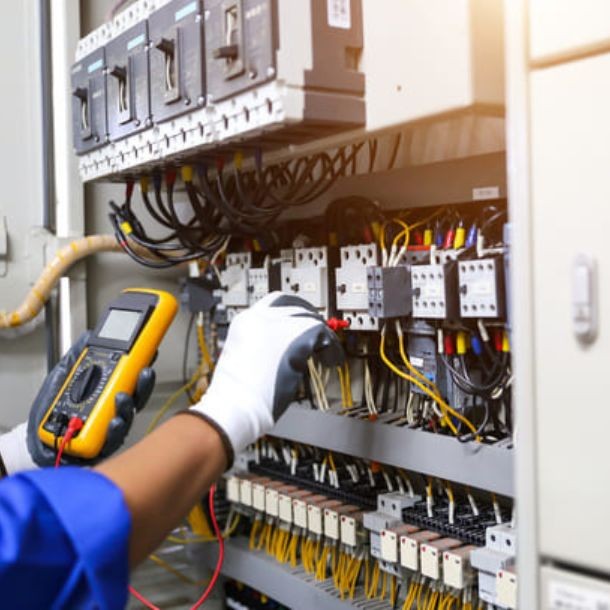
In the industrial sector, electrical cabinets play a crucial role in distributing, protecting, and controlling electrical power. To ensure their reliability and safety, strict standards must be followed during their design, wiring, and installation.
Understanding Wiring Standards for Industrial Electrical Cabinets
Standard NFC 15-100: A Foundational Reference
The NFC 15-100 standard is the primary benchmark for low-voltage electrical installations in France and, by extension, in Quebec. It defines the rules for designing, executing, and verifying electrical installations, including those involving industrial cabinets. The purpose of this standard is to protect both people and equipment while ensuring the systems operate reliably.
IEC 60204-1 and IEC 61439 Standards: Safety and Performance
IEC 60204-1 addresses the safety of electrical equipment in industrial machinery. It specifies the requirements related to the design and installation of electrical cabinets to ensure operator safety and machine compliance.
IEC 61439 sets out general requirements for low-voltage switchgear and controlgear assemblies, including electrical cabinets. This standard emphasizes electrical, mechanical, and thermal performance, thereby ensuring operational reliability.
Non-compliance with IEC 60204-1 and IEC 61439 may lead to:
-
Critical risks: overheating, frequent breakdowns, mechanical incompatibilities, and danger to operators.
-
Regulatory non-conformities, which may lead to denied compensation in case of an incident.
-
This can lead to high costs in maintenance or corrective modifications.
Intertek Certification
An electrical cabinet may include one or several control panels dedicated to automation and control systems. While the cabinet houses power and protection systems, the control panel governs equipment operation. In addition to complying with IEC 60204-1, IEC 61439, and NF C 15-100, our control panels are certified under UL508A and CSA C22.2, thanks to our designers’ accreditation by Intertek. This dual compliance—both international and North American—ensures ready-to-use, safe, and regulation-compliant cabinets across Quebec, Canada, and international markets.
Standard NFC 13-100: For High-Voltage Installations
The NFC 13-100 standard applies to industrial installations that require high-voltage power (above 1 kV). It defines the design and implementation rules for high-voltage electrical installations used in industrial environments. Although it is used less frequently than NF C 15-100, the NF C 13-100 standard remains crucial for high-voltage sites, such as factories or production centers, as it ensures safety, reliability, and regulatory compliance.
Electrical Schematics in Cabinet Design
Types of Electrical Schematics
The design of an industrial electrical cabinet is based on precise schematics that serve as guides for wiring and maintenance. The main types include
-
Single-line diagram: displays electrical connections with one line per circuit, offering a simplified overview.
-
Wiring diagram: details each wire and connection, providing a deep understanding of the wiring.
-
Control diagram: illustrates control circuits, which are essential for industrial automation systems.
Prévoir l’intégration d’un schéma illustratif d’un exemple BEI
Standards Related to Electrical Schematics
Electrical schematics must adhere to specific standards to ensure legibility and compliance. IEC 60617 defines the graphic symbols used in electrical diagrams to promote universal understanding. Additionally, NFC 15-100 imposes documentation requirements for electrical installations, including diagrams.
Essential components of industrial electrical enclosures
Industrial circuit breakers: protection and safety
Industrial circuit breakers are key components within electrical enclosures. They protect circuits from overloads and short circuits. Each circuit breaker must be selected according to the specific requirements of the installation and must comply with relevant standards, such as IEC 60947-2.
The electrical panel: the core of the system
The electrical panel gathers all devices related to protection, control, and power distribution. Its design must comply with NF C 15-100 and IEC 61439 standards to ensure the safety and reliability of the installation.
Wiring industrial electrical enclosures
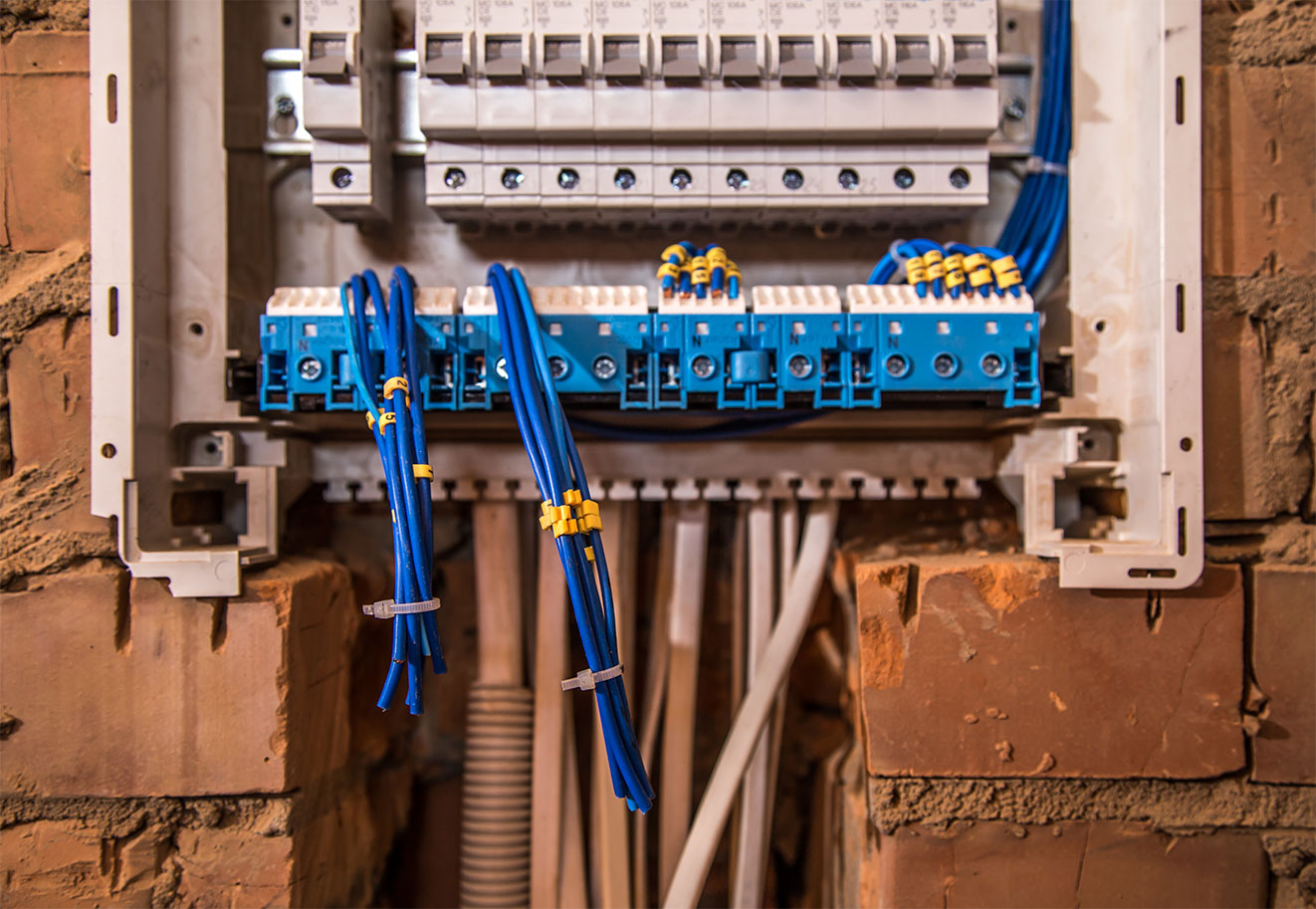
Wiring must be carried out with precision. Conductor colour codes such as green/yellow for ground and blue for neutral must be strictly observed, and wires must be clearly organized to ensure proper identification and safety. The use of DIN rails compliant with IEC 60715 simplifies component mounting and enhances overall safety.
Recommended wiring practices under NF and IEC standards
Proper conductor identification and labelling
Conductors must be clearly marked using colour codes, numerical tags, or labels, in compliance with relevant standards Proper identification facilitates maintenance and reduces the risk of errors during interventions.
Cable management and internal organization
Effective cable management inside the enclosure is essential to ensure safety and ease of access.Using cable trays, zip ties, and organizers helps keep conductors neatly arranged and reduces the risk of electromagnetic interference.
Grounding and protection against interference
Grounding is a fundamental requirement for ensuring the safety of people and equipment. It must be carried out in compliance with NF C 15-100 and IEC 60364 standards. In addition, steps must be taken to protect the installation against electromagnetic interference—such as using shielded cables and maintaining minimum distances between power and signal conductors.
Prioritizing compliance for industrial performance
Electrical wiring standards for industrial enclosures are not just a list of rules; they are foundational to ensuring safety, reliability, and performance across industrial sites. Adhering to approved schematics, selecting appropriate industrial circuit breakers, and designing electrical panels in accordance with current standards are all crucial to preventing incidents and maximizing productivity.
With Groupe BEI, clients benefit from a partner who combines technical expertise, regulatory compliance, and deep local knowledge. Our custom solutions are designed to meet the highest standards of the Quebec and North American industries.